


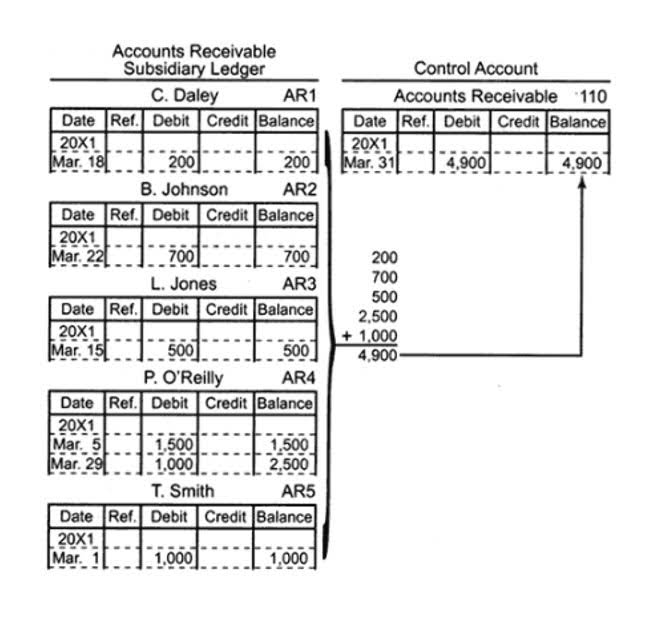
Accountants record bad debt as an expense under Sales, General, and Administrative expenses (SG&A) on the income statement. The allowance method offers an alternative to the direct write off method of accounting for bad debts. With the allowance method, the business can estimate its bad debt at the end of the financial year. Rather than writing off bad debt as unpaid invoices come in, the amount is tallied up only at the end of the accounting year. To better understand the answer to “what is the direct write off method,” it’s first important to look at the concept of “bad debt”.
Discuss the Reasons Why GAAP Prefers the Allowance Method
The direct write-off method is best suited for businesses with minimal bad debts or those that are not required to adhere to Generally accepted Accounting principles (GAAP). The Percentage assets = liabilities + equity of Sales Method is a widely used approach for estimating uncollectible accounts. In this method, bad debt expense is calculated based on a predetermined percentage of a company’s net credit sales. The percentage used is derived from the company’s past experience with uncollectible accounts or industry standards.
Explore Various Reasons Why Companies Encounter Bad Debt
- For instance, a small business owner who operates on a cash basis will find this method aligns perfectly with their overall accounting system.
- As a result, although the IRS allows businesses to use the direct write off method for tax purposes, GAAP requires the allowance method for financial statements.
- GAAP says that all recorded revenue costs must be expensed in the same accounting period.
- Seeing and considering all these points, it is concluded that only being a simple method to record the transaction is not the requirement of an accounting transaction.
- The first entry reverses the bad debt write-off by increasing Accounts Receivable (debit) and decreasing Bad Debt Expense (credit) for the amount recovered.
- In the last 10 years, she has worked with clients all over the country and now sees her diagnosis as an opportunity that opened doors to a fulfilling life.
At the end of each accounting period, the company estimates the amount of uncollectible accounts based on historical data, industry averages, or other relevant factors. This estimated amount is recorded as a bad debt expense and a corresponding credit to the allowance for doubtful accounts. When specific accounts are deemed uncollectible, they are written off against the allowance. When a business realizes that it cannot collect payment on an invoice, it must remove the invoice amount from its accounts receivable and record it as a bad debt expense.

Understanding the Allowance Method
The amount of the change is the amount of the expense in the journal entry. The result of your calculation is what you’ll record on the accounts receivable balance sheet. The adjustment value is the difference between the ending AFDA balance and the starting AFDA balance. In the direct write-off method, you write off a portion of your receivable account as bad debt immediately when you determine an invoice to be uncollectible. You’ll debit bad debt expense and credit accounts direct write-off method receivable per the journal entry below. Bad debt expense, or BDE is an accounting entry that lists the dollar amount of receivables your company does not expect to collect.


The outstanding balance of $2,000 that Craft did not repay will remain as bad debt. When a specific customer has been identified as an uncollectible account, the following journal entry would occur. Invoice Fly helps businesses create, send, and track invoices effortlessly. With features like automated reminders, payment tracking, and customizable templates, you can stay on top of your receivables and minimize losses.
Delay in Recognition of Bad Debt
Creating the credit memo creates a debit to a bad debt expense account and a credit to the accounts receivable account. Under the allowance method, the company records the journal entry for bad debt expense by debiting bad debt expense and crediting allowance for doubtful accounts. When using the percentage of sales method, we multiply a revenue account by a percentage to calculate the amount that goes on the income statement. We already know this is a bad debt entry because we are asked to record bad debt.
Both the Percentage of Sales Method and the Accounts Receivable Aging Method are effective approaches to estimating uncollectible accounts. Each method has its own advantages and drawbacks, and the choice depends on the company’s specific circumstances and preferences. The following table reflects how the relationship would be reflected in the current (short-term) section of the company’s Balance Sheet. This approach ensures your allowance account reflects potential bad debt based on existing unpaid invoices. The Allowance Method complies with Generally Accepted Accounting Principles (GAAP), which require that expenses be matched with the revenues they help generate.
This makes things difficult if months after making a sale on credit, a customer doesn’t pay their invoice. The bad debt AI in Accounting expense reverses recorded revenue entries in subsequent accounting periods when receivables become uncollectible. Under the direct write-off method, bad debts expense is first reported on a company’s income statement when a customer’s account is actually written off. Often this occurs many months after the credit sale was made and is done with an entry that debits Bad Debts Expense and credits Accounts Receivable. So, in the example above, the $7,000 owed to the digital marketing firm would be debited from the bad debts expense account and credited to the contra-asset account, allowance for doubtful accounts. Because this is done in the same accounting period as the corresponding credit sale, it better conforms to accepted accounting practices.
