



Unlike shareholder equity, private equity is not accessible to the average individual. Only “accredited” investors, those with Medical Billing Process a net worth of at least $1 million, can take part in private equity or venture capital partnerships. For investors who don’t meet this marker, there is the option of private equity exchange-traded funds (ETFs). Many view stockholders’ equity as representing a company’s net assets—its net value, so to speak, would be the amount shareholders would receive if the company liquidated all of its assets and repaid all of its debts. However, the impact of these initiatives on shareholders’ equity is not entirely negative. Enhanced reputation and improved customer and employee satisfaction from effective CSR and sustainability initiatives could increase the company’s value.
Additional Profits & Losses
- For example, issuing 1,000 shares at $10 each with a par value of $1 increases the common stock account by $1,000 and additional paid-in capital by $9,000.
- This may cover the reasons behind stock buybacks, the impact of stock splits, and any changes in dividend policies.
- Stockholders’ equity can be referred to as the book value of a business, since it theoretically represents the residual value of the entity if all liabilities were to be paid for with existing assets.
- Conversely, a consistently decreasing equity may imply potential financial distress.
- Shareholder equity alone is not a definitive indicator of a company’s financial health; used in conjunction with other tools and metrics, the investor can accurately analyze the health of an organization.
- Statement of changes in equity helps users of financial statement to identify the factors that cause a change in the owners’ equity over the accounting periods.
A company’s balance sheet contains all of the information needed to calculate shareholders’ equity. A negative shareholders’ equity means that shareholders will have nothing left when assets are liquidated and used to pay all debts owed. On the other hand, positive shareholder equity shows that the company’s assets have grown to exceed the total liabilities, meaning that the company has enough assets to meet any liabilities that may arise.
1 Stockholders’ equity overview
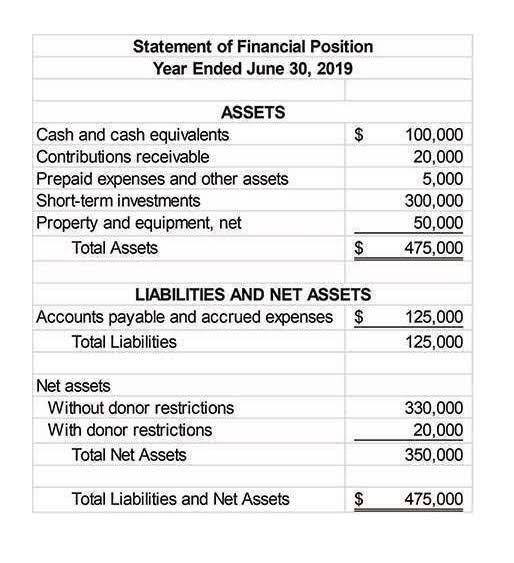
Lastly, a balance sheet is subject to several areas of professional judgment that may materially impact the report. For example, accounts receivable must be continually assessed for impairment and adjusted to reflect potential uncollectible accounts. Without knowing which receivables a company is likely to actually receive, a company must make estimates and reflect its best guess as part of the balance sheet. Different accounting systems and ways of dealing with depreciation and inventories will also change the figures posted to a balance sheet. Because of this, managers have some ability to game the numbers to make them look more favorable. Pay attention to the balance sheet’s footnotes to determine which systems are being used in their accounting and to look out for any red flags.
Definition of the Statement of Stockholders’ Equity
The retained earnings are used primarily for the expenses of doing business and for the expansion of the business. If the company ever needs to be liquidated, SE is the amount of money that would be returned to these owners after all other debts are satisfied. Also known as statement of stockholders equity definition additional paid-up capital, this component counts the additional amount that shareholders pay above the actual share price. This ending equity balance can then be cross-referenced with the ending equity on the balance sheet to make sure it is accurate.

Negative equity signals financial distress and may indicate insolvency or the need for restructuring. Investors and analysts use stockholders’ equity information to evaluate the company’s financial stability, profitability, and growth potential. It helps them make informed investment decisions and assess the company’s long-term prospects. Dividends reduce retained earnings as they represent a distribution of profits to shareholders. Cash dividends decrease both retained earnings and cash, while stock dividends increase the number of shares and adjust the equity accounts accordingly. Changes in ownership and capital structure can gross vs net significantly impact stockholders’ equity.
- A statement of shareholders’ equity also can be useful for investors who want more information about a single component of the company’s ownership.
- This document details transactions such as issuance of new shares, repurchase of existing shares, and dividend distributions.
- Understanding the components of stockholders’ equity is essential for analyzing a company’s financial statements and assessing its long-term viability.
- The outcome of the subject and restoration of shares can be accessible distinctly for share premium reserve and share capital reserve.
- There are many other possible sorts of elements that could be in a statement of change in equity.

Stockholders’ equity is important because it provides insight into the financial health and stability of a company. It reflects the company’s net worth and is used by investors and analysts to assess the value and financial performance of the business. Issuing new shares can dilute existing ownership percentages but may raise additional capital for business growth. Conversely, share repurchases can consolidate ownership but require the company to use its resources, potentially affecting liquidity. A company can use its balance sheet to craft internal decisions, although the information presented is usually not as helpful as an income statement.


When an investment is publicly traded, the market value of equity is readily available by looking at the company’s share price and its market capitalization. For private entities, the market mechanism does not exist, so other valuation forms must be used to estimate value. At some point, the amount of accumulated retained earnings can exceed the amount of equity capital contributed by stockholders. Retained earnings are usually the largest component of stockholders’ equity for companies that have operated for many years. Moreover, if such initiatives do not yield anticipated financial returns, they could lead to a decline in total shareholders’ equity. Such a scenario may create tension with shareholders, particularly those that primarily focus on financial returns.
